
KANO, NIGERIA
Responding to one of Nigeria's highest concentrations of people living with Sickle Cell Disorder, the Sickle Cell Foundation Nigeria (SCFN) has concluded a landmark World Sickle Cell Day campaign in Kano State, reaching thousands through medical outreach programmes, blood donation drives, healthcare worker training, genotype education, religious leaders' engagement and direct support for more than 700 vulnerable families.
The week-long intervention, delivered in partnership with the Kano State Government, healthcare institutions, faith-based organisations, development partners, private sector partners and community stakeholders, is being recognised as one of the most comprehensive World Sickle Cell Day commemorations ever implemented in Nigeria.
Combining advocacy, direct healthcare delivery, social support, blood donation mobilisation and capacity building, the initiative demonstrated how coordinated action can improve outcomes for people living with one of the world's most common inherited blood disorders.
Why Kano?
Kano State was selected as the focal point of the Sickle Cell Foundation Nigeria's 2026 World Sickle Cell Day commemoration because it carries one of the highest burdens of Sickle Cell Disorder in Nigeria.
As Nigeria continues to bear the world's largest burden of Sickle Cell Disorder, Kano remains one of the states most significantly affected by the condition due to its large population and the high number of individuals and families living with the disease.
For the Sickle Cell Foundation Nigeria, concentrating resources and interventions in Kano represented an opportunity to deliver support where the need is greatest while demonstrating the impact of coordinated public health action in a high-burden setting.
The state's significant disease burden, coupled with its strategic importance as the commercial and population centre of Northern Nigeria, made it an ideal location for a large-scale intervention combining prevention, advocacy, treatment support and community mobilisation.
By bringing together government institutions, healthcare providers, religious leaders, development partners and community stakeholders, the Foundation sought to accelerate awareness, improve access to care and strengthen efforts to reduce the long-term impact of Sickle Cell Disorder on affected families.
Medical Outreach Delivers Lifesaving Support
One of the most impactful components of the World Sickle Cell Day activities was a large-scale medical outreach programme that provided direct healthcare services and humanitarian support to children and families living with Sickle Cell Disorder.
Hundreds of beneficiaries received free medical consultations, genotype education, counselling and routine medications aimed at improving disease management and preventing complications. In a significant boost to patient care, the Foundation provided routine medication doses sufficient to cover several months of treatment for many beneficiaries, helping families cope with the high cost of long-term disease management.
The outreach also served as an important platform for public education. Healthcare professionals provided counselling on genotype compatibility, preventive healthcare practices, crisis management and the importance of regular medical follow-up. Beneficiaries and their caregivers received information designed to empower them to make informed health and reproductive decisions.
In addition to medical support, the Foundation distributed food palliative packages to more than 700 families and children living with Sickle Cell Disorder, helping to address nutritional and economic challenges that often affect vulnerable households managing chronic illness.
For many beneficiaries, the intervention represented much more than a commemorative event. It provided practical support, access to essential medicines and renewed hope for families navigating the daily realities of living with Sickle Cell Disorder.
More Than 300 Blood Donors Answer the Call
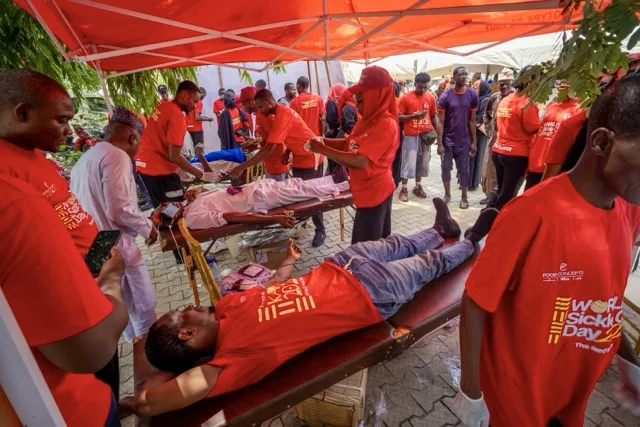
A major highlight of the campaign was the large-scale blood donation drive organised to improve access to safe blood for individuals living with Sickle Cell Disorder.
More than 300 voluntary blood donors participated in the exercise, making it one of the largest blood donation drives conducted as part of World Sickle Cell Day activities in Nigeria in 2026.
The donated blood units are currently undergoing screening and processing and will be made available to patients living with Sickle Cell Disorder receiving treatment at Aminu Kano Teaching Hospital.
Medical experts note that regular access to safe blood remains critical for many patients’ experiencing severe anaemia and other life-threatening complications associated with the disease.
Building the Capacity of Healthcare Workers
Recognising that better health outcomes require stronger healthcare systems, the Foundation convened healthcare professionals from across Kano State for a specialised medical training programme.
The training focused on contemporary approaches to Sickle Cell management, patient counselling, psychosocial support, crisis prevention and referral systems.
Participants were equipped with updated knowledge and practical tools to strengthen the quality of care available to individuals living with Sickle Cell Disorder across healthcare facilities in the state.
The programme also sought to establish a stronger network of healthcare providers capable of supporting future interventions and improving continuity of care for patients.
Religious Leaders Positioned as Catalysts for Change
In a unique approach to public health advocacy, the Sickle Cell Foundation Nigeria engaged both Christian and Muslim religious leaders in a dedicated seminar focused on Sickle Cell prevention and awareness.
Participants explored the critical role faith leaders can play in promoting genotype testing, premarital counselling, newborn screening and informed decision-making among congregants.
The training recognised the enormous influence religious leaders wield within communities and their ability to shape attitudes and behaviours related to marriage, family planning and healthcare.
Organisers expressed optimism that faith-based advocacy would contribute significantly to reducing misconceptions about Sickle Cell Disorder and encouraging responsible genotype decisions among young people.
Public Awareness Campaign Reaches Thousands
The campaign also featured large-scale sensitisation activities, media engagements, advocacy rallies and community outreach programmes designed to increase public understanding of Sickle Cell Disorder.
Students, youth groups, healthcare workers, community leaders, volunteers and advocates participated in awareness activities that highlighted the importance of genotype testing, informed marriage decisions, newborn screening and support for individuals living with the condition.
Educational materials and community conversations sought to address misconceptions surrounding Sickle Cell Disorder while encouraging greater acceptance and support for affected individuals and families.
Thousands of residents across Kano State were reached through physical engagements, media coverage and community mobilisation efforts throughout the commemorative period.
A Demonstration of Partnership and Impact
The success of the Kano intervention was driven by collaboration between government agencies, healthcare institutions, community organisations, religious bodies, development partners, private sector organisations and volunteers who contributed their time, expertise and resources to the cause.
The campaign demonstrated that addressing the burden of Sickle Cell Disorder requires a holistic approach that combines healthcare delivery, prevention, education, advocacy and social support.
By integrating medical outreach, medication support, genotype education, food assistance, blood donation, healthcare worker training and community awareness, the programme offered a model for comprehensive Sickle Cell interventions in high-burden settings.
Looking Ahead
As Nigeria continues to confront the enormous health and socio-economic burden of Sickle Cell Disorder, the Sickle Cell Foundation Nigeria has reaffirmed its commitment to expanding access to care, strengthening advocacy, promoting newborn screening and supporting families affected by the condition.
Officials of the Foundation noted that while significant progress has been made in increasing awareness, much more remains to be done to ensure that every child born with Sickle Cell Disorder has access to timely diagnosis, quality healthcare and the support needed to live a healthy and productive life.
The 2026 World Sickle Cell Day activities in Kano have demonstrated what is possible when strategic partnerships, community engagement and direct service delivery come together in pursuit of a common goal. For the thousands reached through awareness campaigns, the hundreds who received medical care and medications, the more than 700 families supported with food assistance and the patients who will benefit from over 300 donated units of blood, the intervention was more than a celebration of World Sickle Cell Day.
It was a powerful statement of solidarity, compassion and commitment to building a future where no individual living with Sickle Cell Disorder is left behind.
Join Us in Making a Difference
Your support can help provide lifesaving medications, expand newborn screening programmes, strengthen healthcare worker training, fund medical outreaches, mobilise voluntary blood donation, support vulnerable families, and drive advocacy that transforms lives.
Whether you choose to donate, partner with us, volunteer your time, or become an advocate, your contribution helps bring hope to individuals and families living with sickle cell disorder across Nigeria.
Together, we can alleviate the burden of sickle cell disorder and build a future where every child born with the condition has the opportunity not just to survive, but to thrive.
Donate today. Partner with us. Help change lives.